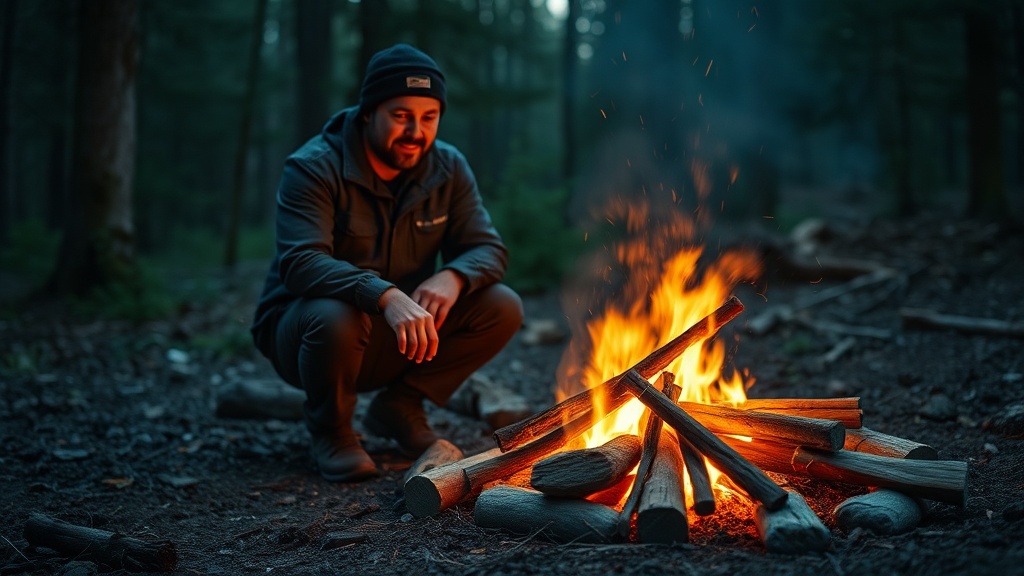
Building a Reliable Campfire Without Matches

Fire starting is a fundamental skill for any wilderness excursion.
Did you know that a single spark from a piece of flint can reach temperatures exceeding 4,000 degrees Fahrenheit? While most people rely on a plastic box of matches or a butane lighter, these items can fail when they get wet or run out of fuel. Learning to build a fire from scratch—using only natural materials or primitive tools—isn't just about being a survivalist; it's about being prepared for when your modern gear fails. This guide covers the mechanics of heat, the types of fuel you need to gather, and the specific methods for starting a blaze when you're stuck without a lighter.
Before you even think about striking a spark, you need to understand the three pillars of fire: heat, fuel, and oxygen. If any one of these is missing, you've got nothing but a pile of cold wood. Most beginners fail because they try to light a large log immediately. You can't do that. You need to start small, with tiny fibers that catch heat easily, and then slowly build the size of your fuel. It's a slow, methodical process that requires patience rather than brute force.
What kind of wood works best for starting a fire?
Not all wood is created equal. If you try to light a damp piece of cedar or a thick branch, you'll spend hours spinning a bow drill with nothing to show for it. You need to categorize your wood into three distinct groups: tinder, kindling, and fuel.
- Tinder: This is the most important part. It's the material that catches the very first spark. Think dried grass, bird nests, shredded cedar bark, or even the fine-grained fluff from a cattail plant. It needs to be incredibly fine and highly flammable.
- Kindling: Once your tinder is glowing, you need kindling. These are small twigs, roughly the thickness of a pencil or a toothpick. They provide the structure needed to keep the heat concentrated on the tinder.
- Fuel Wood: This is the heavy stuff—the logs that will keep the fire burning through the night. This wood should be dry and seasoned. If it's green or fresh, it will smoke heavily and struggle to stay lit.
A great resource for identifying local wood types is the U.S. Forest Service, which provides extensive data on forest ecosystems and wood properties. Knowing whether you're standing in a pine forest or a hardwood forest changes your entire approach to gathering material.
How do you start a fire with a ferrocerium rod?
A ferrocerium rod (or "ferro rod") is a reliable tool because it works even when soaking wet. It's a metal alloy that produces incredibly hot sparks when scraped with a hard object. To use it effectively, you don't just strike it once and hope for the best. You need to prepare a nest of tinder first. Place your tinder in a small pile, then hold the rod at a 45-degree angle. Use a striker or the back of a knife to scrape the rod, sending a shower of sparks directly into the center of your tinder nest. Don't just tap it; you need a vigorous, forceful strike to create enough heat to actually ignite the fibers.
If you're using a traditional fire starter, like a piece of flint and steel, the process is similar but requires more precision. The spark produced by flint is much cooler than a ferro rod, so you'll need even finer tinder—think almost microscopic fibers—to catch that heat. If the wind is blowing, you'll need to shield your work with your body or a piece of bark to ensure the spark doesn't blow away before it finds a home in your tinder.
Setting up your fire structure
How you arrange your wood is just as important as how you light it. There are several common structures, but the "teepee" method is the most reliable for beginners. Place your tinder in the center, then lean your kindling sticks against each other in a cone shape around the tinder. This creates a natural chimney effect, drawing oxygen upward through the center of the structure. This upward draft is what keeps the fire hungry.
| Structure Type | Best Use Case | Difficulty |
|---|---|---|
| Teepee | Quick heat, high flame | Low |
| Log Cabin | Long-lasting, steady heat | Medium |
| Lean-to | Wind protection | Medium |
The log cabin method is better for cooking or sustained warmth, as it creates a stable bed of coals. You build a square structure with larger sticks, leaving a small hole in the middle for your tinder and kindling. This provides more stability and prevents the fire from collapsing on itself. For more technical information on wilderness survival and fire-building techniques, the National Park Service offers numerous resources on backcountry safety and fire prevention.
One thing to remember: never use green wood if you can avoid it. Green wood contains moisture that absorbs the heat from your fire, making it nearly impossible to maintain a steady temperature. Always look for wood that is "dead and down"—sticks that have fallen from trees and are already brittle. If you can snap a twig with a sharp "crack," it's dry enough to burn. If it bends or feels soft, it's too wet and will only produce smoke and frustration.
If you find yourself in a situation where you're struggling to get the fire going, don't panic. Most people fail because they rush the process. They add large pieces of wood too early, which smothers the tiny flame they just created. Slow down. Feed the fire with the smallest pieces first. Let the tinder grow into a flame, then the kindling, then finally the fuel. It's a staircase of heat, and you have to climb it one step at a time.