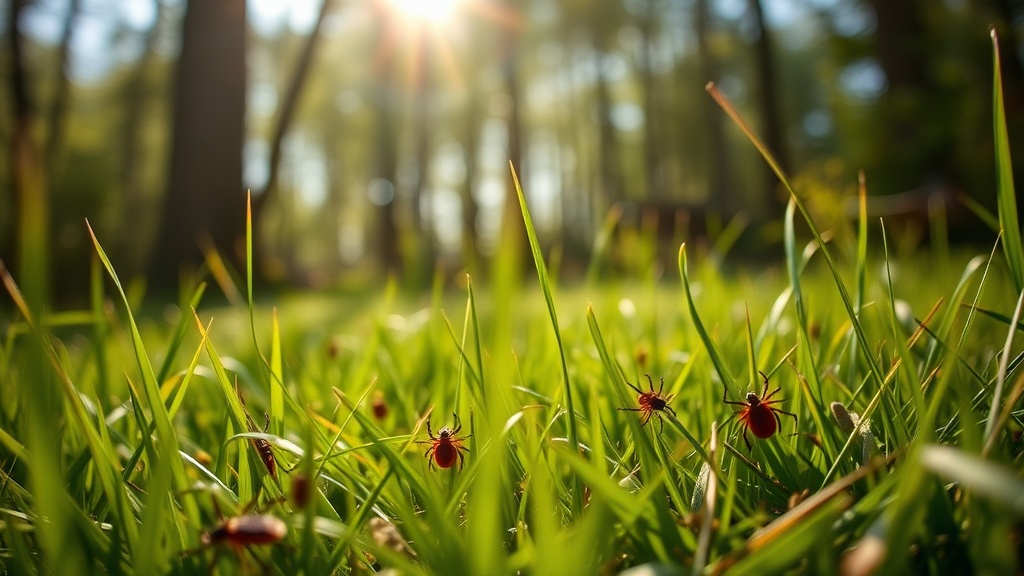
Why Your Backyard Grass is More Dangerous Than the Deep Woods for Ticks

Most hikers think they're safe from ticks as long as they stay out of the deep, dark forest. It's a comforting thought, but it's flat-out wrong. Ticks actually prefer the "edge" zones—where your manicured lawn meets the tall weeds or where a trail cuts through a meadow. If you're walking through the UNB Woodlot or Odell Park in Fredericton, you aren't just in a nature park; you're in the prime habitat for black-legged ticks. This isn't about scaring you off the trails, but it's about ditching the myths that keep people from taking the right precautions. The reality of hiking in New Brunswick has changed over the last decade, and our old habits haven't kept up with the exploding tick population.
Why are ticks becoming such a problem in New Brunswick?
It wasn't that long ago when ticks were a rarity around here. You might find one on a dog after a long day in the brush, but they weren't the constant threat they are today. So, what changed? Climate change is the big one. Our winters aren't as consistently cold as they used to be, which means fewer ticks are dying off during the frost. On top of that, the white-tailed deer population is booming. Since deer are the primary transport for adult ticks, they're spreading these tiny arachnids into areas that used to be clear. We're seeing them in suburban backyards just as often as we see them on remote hiking trails.
The black-legged tick (also known as the deer tick) is the one we're mostly worried about because it can carry the bacteria that causes Lyme disease. According to Government of New Brunswick health data, the number of confirmed Lyme cases has risen significantly. It's not just a southern New Brunswick problem anymore; it's right here in our own neighborhoods. They don't jump, and they don't fly. They use a behavior called "questing." A tick will climb to the top of a blade of grass or the end of a twig and reach its front legs out, waiting for something warm-blooded to brush past. When you walk through that tall grass at the edge of the trail, you're literally walking right into their outstretched arms.
What are the best ways to keep ticks off your body?
The dorkiest look in the world is actually your best defense: tuck your pants into your socks. It looks ridiculous, but it creates a physical barrier that prevents ticks from crawling up the inside of your pant leg and finding your skin. Light-colored clothing is also a smart move. It doesn't repel them, but it makes it much easier to spot a dark, sesame-seed-sized tick before it hitches a ride to your waistline. I've spent years testing different gear, and while fancy "insect-shield" clothes exist, the sock-tuck method is free and incredibly effective.
When it comes to sprays, don't just grab whatever is on the shelf. You want something with DEET or Icaridin. Icaridin is often my preference because it doesn't have that greasy feel or the smell that melts plastic gear (DEET is notorious for ruining expensive watch faces and synthetic jackets). Health Canada recommends these as the primary chemical defenses. If you're a serious hiker, you can also look into Permethrin. It's a spray for your clothes—never your skin—that actually kills ticks on contact. While it's harder to find in Canadian retail stores compared to the US, you can buy pre-treated clothing from several major outdoor brands. It lasts through dozens of washes and provides a level of protection that sprays just can't match.
What is the right way to remove a tick?
Tick removal is often treated like some kind of dark art involving soap-soaked cotton balls, peppermint oil, or hot needles. Stop doing that. These "hacks" are dangerous. When you irritate a tick with heat or chemicals, it increases the chance that the tick will regurgitate its stomach contents into your bloodstream. If that tick is carrying Lyme or another infection, you've just fast-tracked the transmission. The goal is a clean, calm removal, not a dramatic one.
Get yourself a pair of fine-tipped tweezers. Don't use the blunt ones you keep in the bathroom for eyebrows; you need something that can get right down to the skin. Grasp the tick as close to its head as possible and pull upward with steady, even pressure. Don't twist. If the head stays in, don't panic—it's like a splinter and your body will eventually push it out. The important part is that you've removed the body, which contains the bacteria. Once it's out, clean the area with rubbing alcohol or soap and water. If you want to be extra careful, you can save the tick in a small container or a zip-lock bag to show a doctor, or upload a photo to eTick.ca for identification.
The 24-hour window myth
There's a common belief that a tick has to be attached for at least 36 to 48 hours to transmit Lyme disease. While that's the general window for most cases, it isn't a hard rule. Some studies suggest transmission can happen faster depending on how the tick is handled or if it was already partially fed on another animal. This is why the "tick check" after every hike is so important. When you get home, don't just flop on the couch. Go straight to the shower. This gives you a chance to check the spots ticks love: behind the knees, in the groin area, under the arms, and around the hairline. Ticks aren't always looking for an immediate meal; they'll often wander your body for an hour or two looking for the perfect, thin-skinned spot to settle in.
Post-hike gear management
Your clothes can be a Trojan horse for ticks. If you strip off your hiking gear and throw it in the hamper, those ticks can crawl out and find you—or your pets—later. The best move is to throw your dry hiking clothes into the dryer on high heat for at least ten to fifteen minutes. It's the dry heat that kills them, not the water in a washing machine. Ticks are incredibly resilient to drowning, but they can't handle the desiccation of a hot dryer cycle. It's a simple step that takes almost no effort but cuts your risk of a "delayed" bite significantly.
Being outdoors in New Brunswick shouldn't feel like a chore because of these little pests. If you're smart about where you walk and how you dress, the risk is manageable. We don't need to stay inside; we just need to stop pretending that the woods are the only place where nature can bite back. Stick to the center of the trail, keep your socks pulled high, and keep those tweezers in your first-aid kit. The more you know about how they actually behave, the less power they have to ruin your afternoon at the park.